Chimney Waterproofing: Is It Worth It?
For Pittsburgh chimneys, waterproofing might be the best inexpensive investment you can make. Here's why.
Published April 9, 2026 · Roosevelt Chimney Works
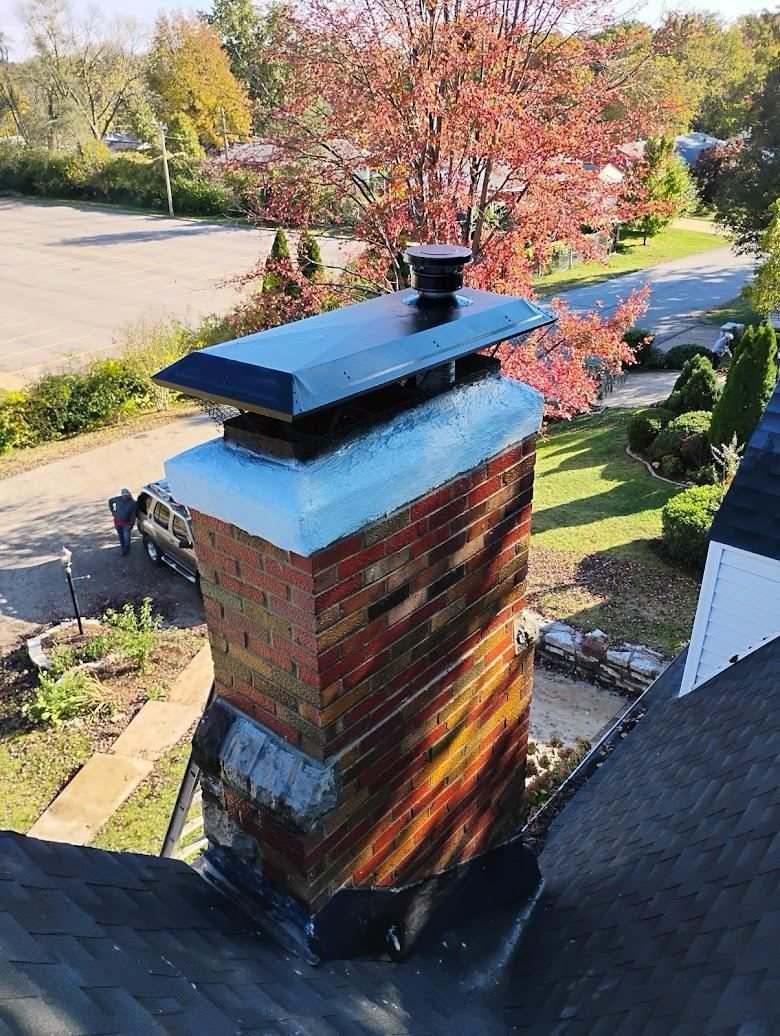
Of all the services a masonry chimney can receive, waterproofing might be the most underrated — especially in a climate like Pittsburgh's. It's inexpensive, preventive, and directly targets the number one cause of chimney deterioration. Here's the case for it.
The problem it solves
Brick and mortar are porous — they absorb water like a sponge. In our climate, that absorbed water freezes, expands, and breaks the masonry apart from the inside over repeated freeze-thaw cycles. Waterproofing stops the absorption, interrupting the cycle before it starts.
The critical detail: breathability
This is where it's easy to go wrong. A regular sealant or paint that traps moisture inside the masonry does more harm than good — it can accelerate the very spalling it was meant to prevent. Proper chimney waterproofing uses a vapor-permeable product that repels liquid water from outside while letting trapped moisture escape. Breathability is everything.
When it makes sense
- After repointing or masonry repair, to protect the fresh work.
- On older brick that's begun to absorb water.
- Where efflorescence keeps returning.
- As preventive care before winter.
- On any chimney that's never been sealed.
Seal sound masonry, not crumbling masonry
One important note: waterproofing should be applied to clean, sound masonry. Sealing crumbling joints accomplishes nothing — which is why waterproofing so often follows repointing. Sealing repaired, sound masonry, though, protects the whole investment for years and is genuinely worth it in our climate.