Chimney Crown Repair vs. Replacement
When can a cracked crown be sealed, and when does it need rebuilding? Here's how to tell.
Published November 6, 2025 · Roosevelt Chimney Works
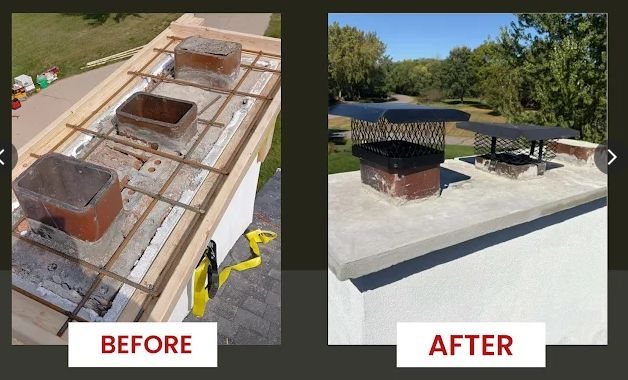
The crown is your chimney's first line of defense against water — the sloped slab on top that sheds rain away from the masonry. When it cracks (and in our climate, it eventually does), you face a choice: seal it, or rebuild it? Here's how the decision gets made.
When a crown can be repaired
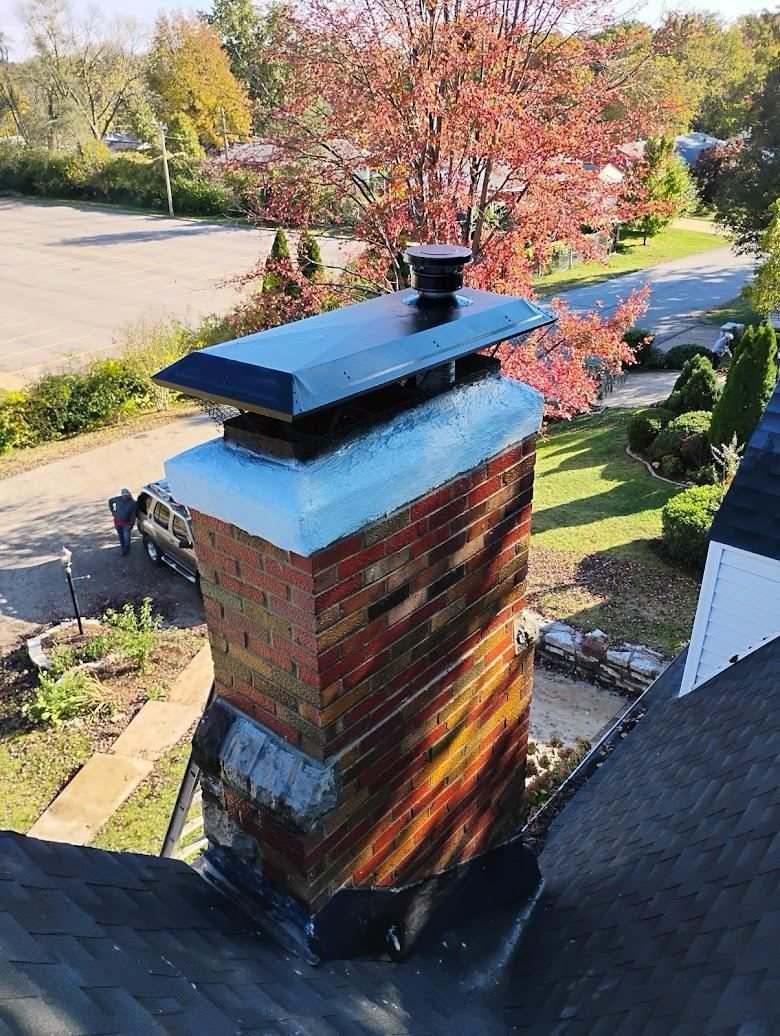
If the crown is structurally sound but has developed cracks, it can usually be repaired with a flexible, waterproof crown coating. This sealant fills existing cracks and — importantly — flexes with temperature changes rather than cracking again. It's a cost-effective repair that can add years of service to a sound crown.
When a crown needs rebuilding
Sometimes coating isn't enough. If the crown is crumbling, missing chunks, or cracked all the way through, it needs to be rebuilt. And often the original crown was the problem: many were poured flat and thin, with no slope to shed water and no overhang to carry runoff clear of the masonry. Those fail early and take the masonry below with them.
What makes a rebuilt crown last
A properly built crown has three details most failed crowns lack:
- A slope, so water runs off instead of pooling.
- An overhang with a drip edge, to carry runoff clear of the chimney walls.
- An expansion joint around the flue, so normal movement doesn't crack it.
Build in those details and a crown protects everything beneath it for decades. Skip them — as many original crowns did — and you repeat the failure in a few years.
How to decide
The honest answer comes from a look at the crown's actual condition. Sound with cracks? Coating likely does the job. Crumbling or poorly built? Rebuilding is the lasting fix. A good chimney professional will show you which applies rather than defaulting to the more expensive option.