
Cracked Chimney Crown: Why It's a Big Deal
The crown is small and out of sight — but a cracked one funnels water into your entire chimney. Here's what to know.
Published April 16, 2026 · Roosevelt Chimney Works
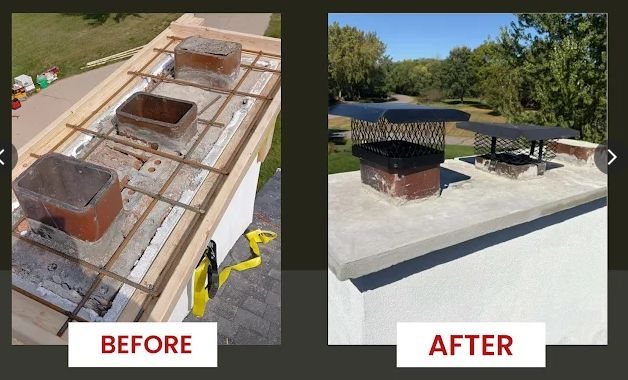
The chimney crown is easy to ignore — it's a slab of concrete at the very top, out of sight from the ground. But a cracked crown is one of the more consequential chimney problems, because it funnels water directly into the masonry below. Here's why it matters and what to do.
What the crown does
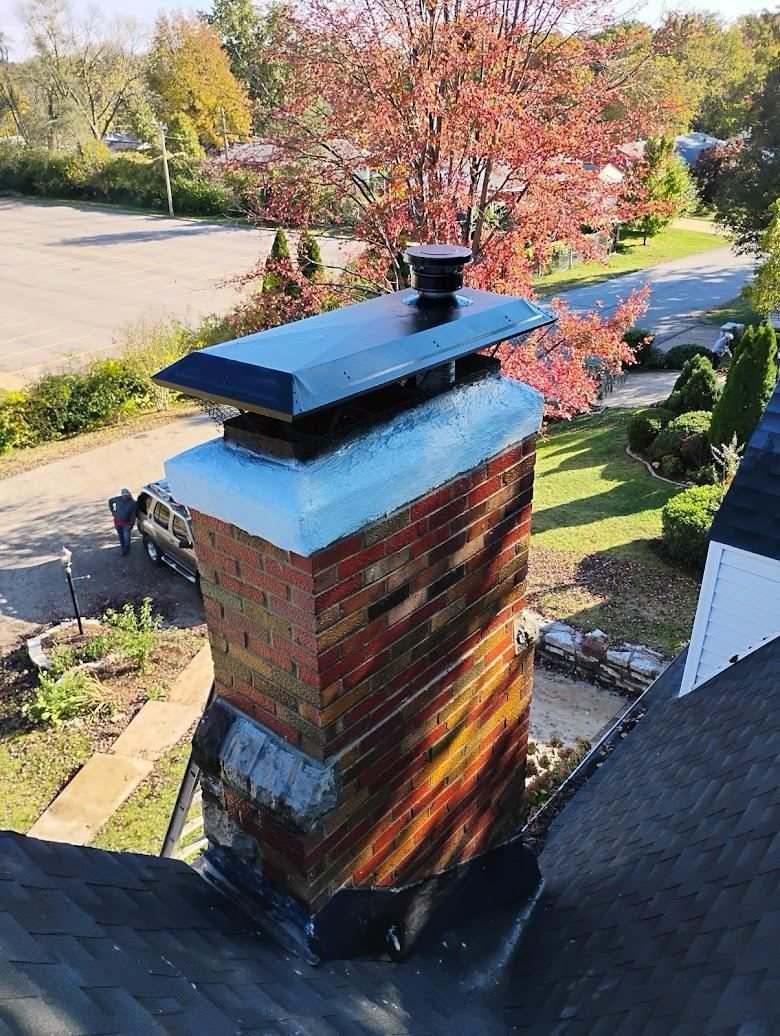
The crown is the sloped slab that covers the top of the chimney's masonry, around the flue. Its whole job is to shed water away from the structure — like a roof for your chimney. When it's intact and properly sloped, rain runs off harmlessly. When it cracks, that protection fails.
Why cracks form
The crown is the single most weather-exposed part of the entire chimney — full sun, driving rain, and every freeze-thaw cycle, head-on. Cracks are almost inevitable over time. Worse, many crowns were originally built flat and thin, with no slope or overhang, which makes them fail early.
What a cracked crown leads to
Once water gets through the crown, it flows down into the masonry, where it does the familiar freeze-thaw damage: spalling brick, deteriorating mortar, and interior leaks. Because the crown sits atop everything, its failure can affect the whole structure beneath it. That's why catching it early is so valuable.
Repair or rebuild
A crown that's structurally sound but cracked can usually be sealed with a flexible, waterproof coating that fills the cracks and flexes with temperature changes. A crown that's crumbling or was poorly built needs rebuilding — ideally with the slope, overhang, and expansion joint that make crowns last. A good inspection tells you which yours needs.