Chimney Inspection vs. Chimney Cleaning: What's the Difference?
They're often bundled together, but they're not the same thing. Here's what each one does — and why you usually want both.
Published October 9, 2025 · Roosevelt Chimney Works
People often use 'inspection' and 'cleaning' interchangeably, but they're two distinct services that do different jobs. Understanding the difference helps you know what you're actually paying for — and why the two so often go together.
What a cleaning does
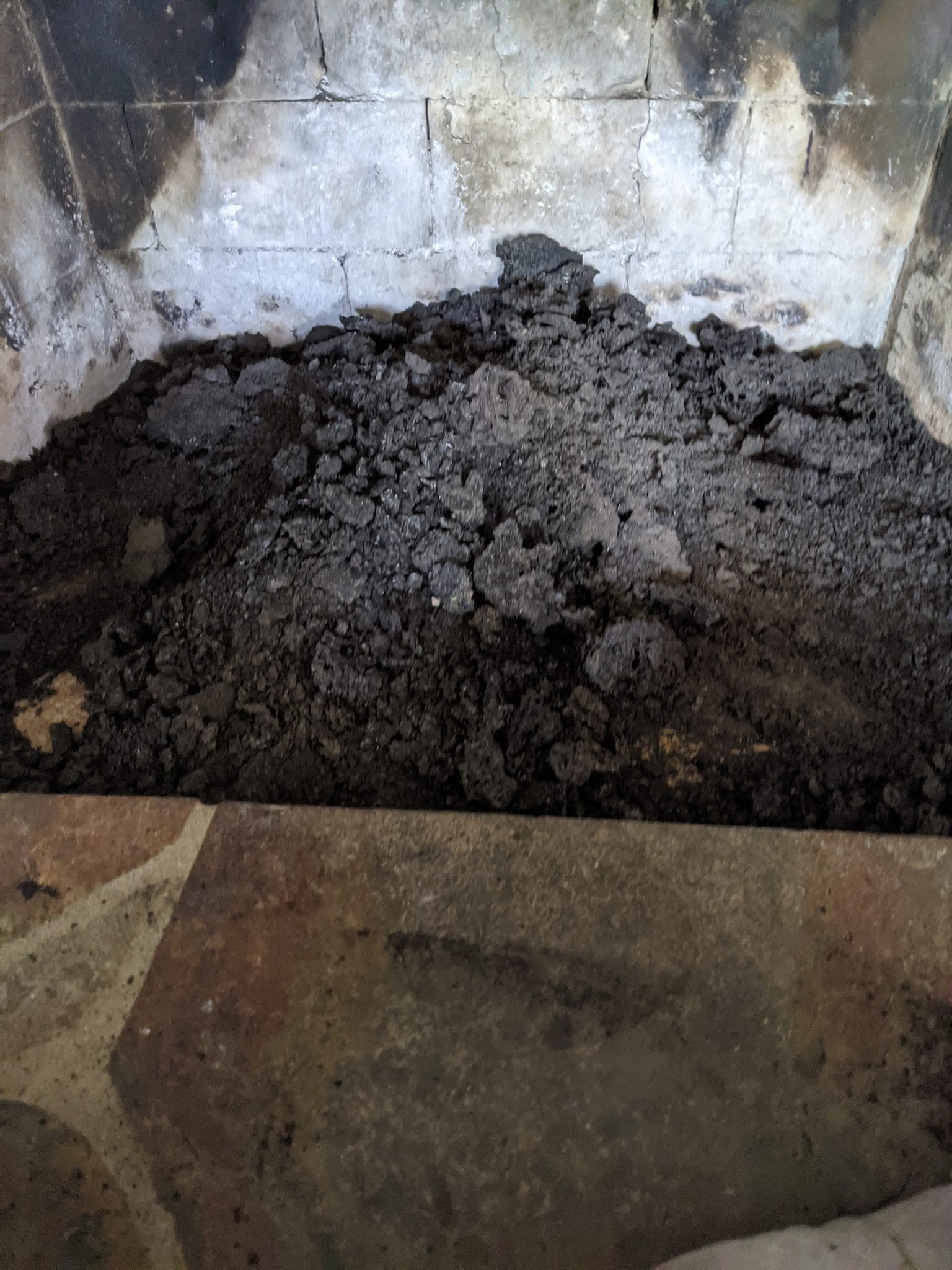
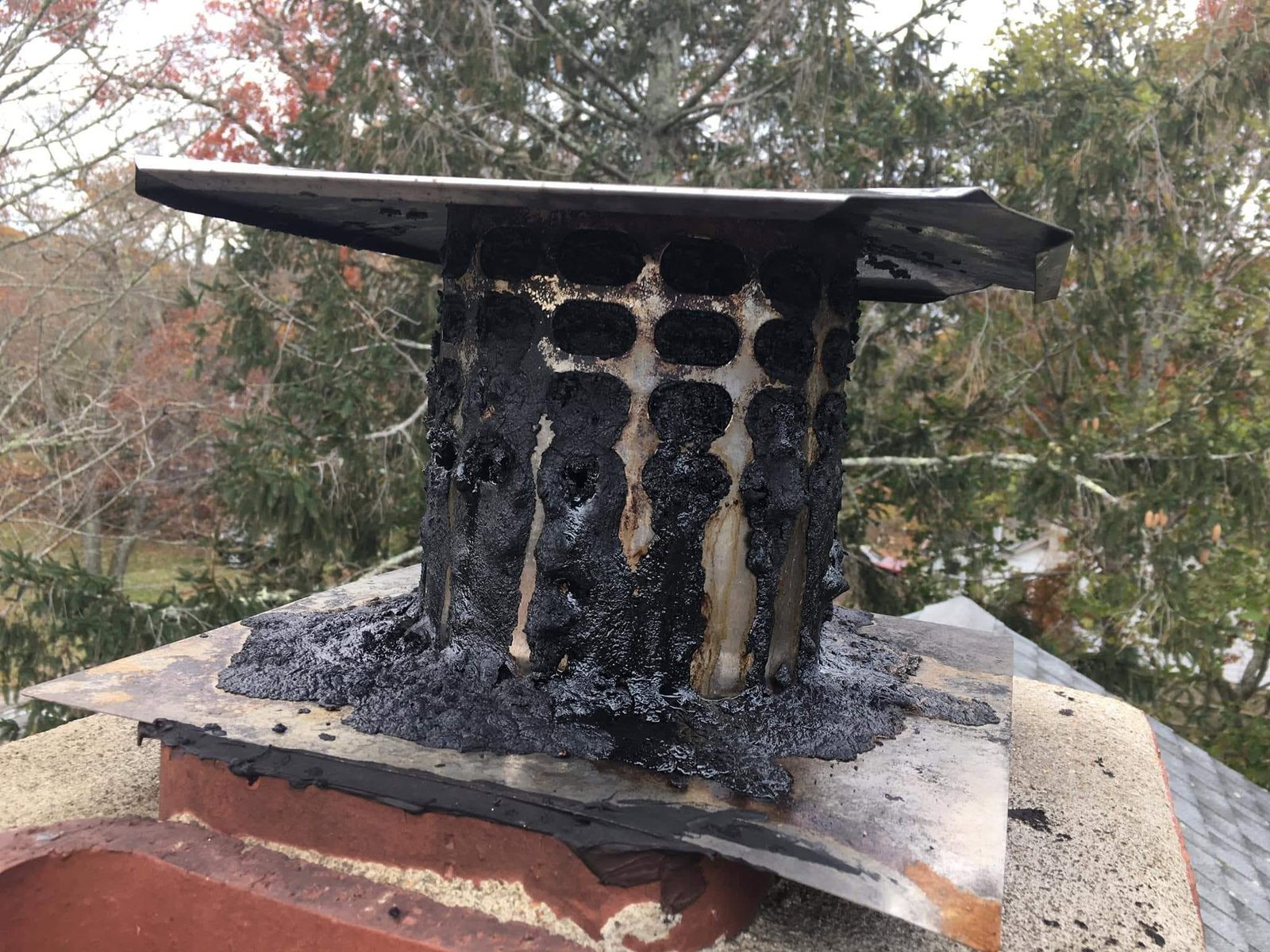
A cleaning (or sweeping) is the mechanical removal of soot and creosote from the flue, plus clearing the smoke shelf, damper, and firebox. Its purpose is safety and performance: less creosote means less fire risk and better draft. It's maintenance — something you do on a regular schedule.
What an inspection does
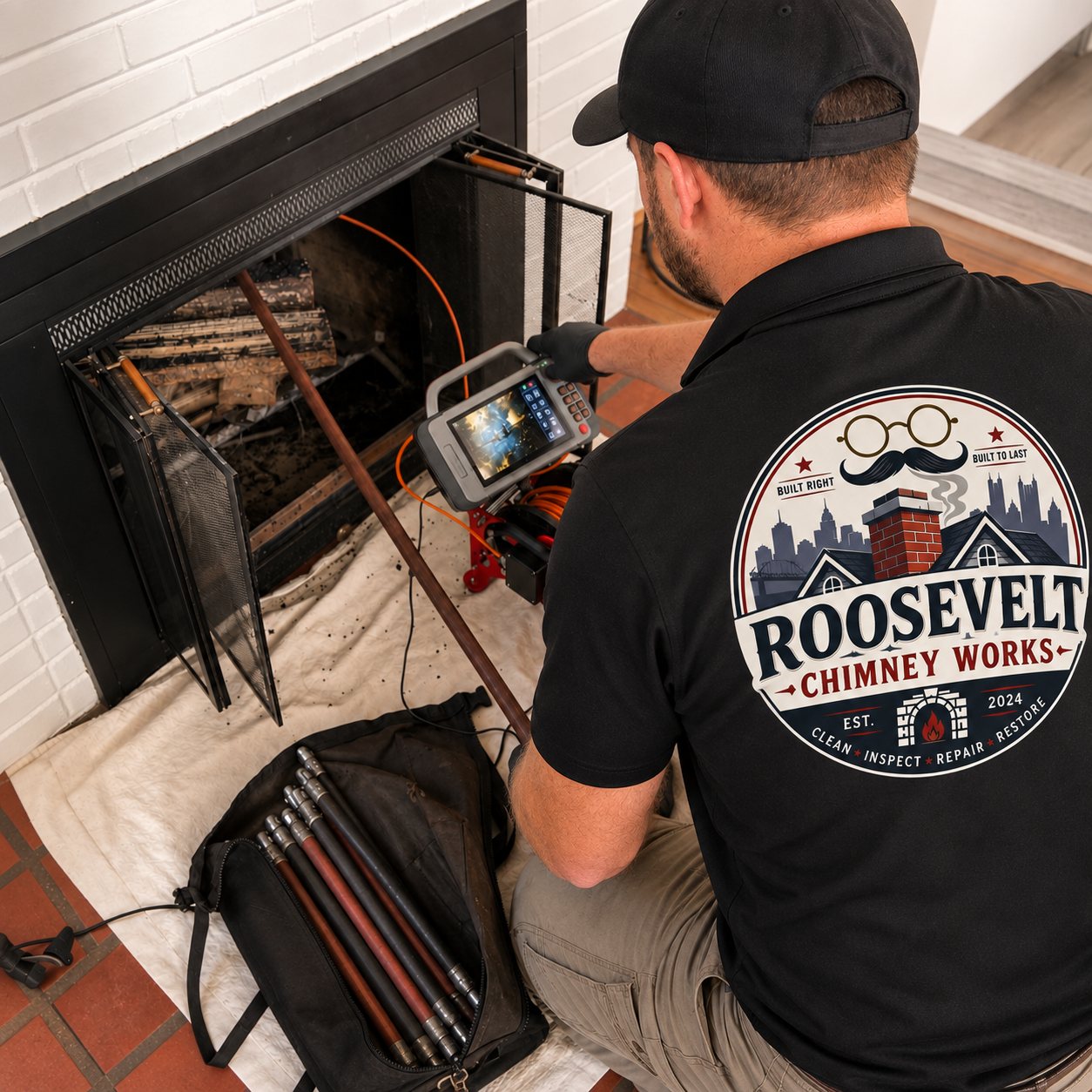
An inspection is diagnostic. Rather than removing buildup, it assesses the condition of the chimney — the flue liner, masonry, crown, cap, flashing, firebox, and damper — to find damage, deterioration, or hazards. A thorough inspection uses a camera to see inside the flue, where the most serious problems hide.
Inspections come in levels. A Level 1 covers readily accessible areas for a system in normal use. A Level 2 adds a full camera scan of the flue and is standard for home sales, after a chimney fire, or when something seems wrong.
Why you usually want both
Here's the practical part: a chimney often needs to be cleaned before it can be fully inspected, because a thick layer of creosote hides the flue walls. That's why the two are commonly done together — clean first, then inspect the now-visible flue. Doing both in one visit gives you a safe flue and a clear picture of its condition.
- Cleaning = removing buildup (maintenance).
- Inspection = assessing condition (diagnosis).
- Both together = safe flue plus knowing its true condition.
- Annual timing before winter covers both efficiently.
The bottom line
If you're a regular wood burner, an annual visit that includes both a cleaning and an inspection is the sensible standard. If you're buying or selling a home, prioritize a Level 2 inspection specifically — that's the one that reveals what you're really getting.