
Water Around the Fireplace: Where It's Coming From
Finding water or damp near your fireplace? The source is almost never where the water appears. Here's how to track it down.
Published February 5, 2026 · Roosevelt Chimney Works
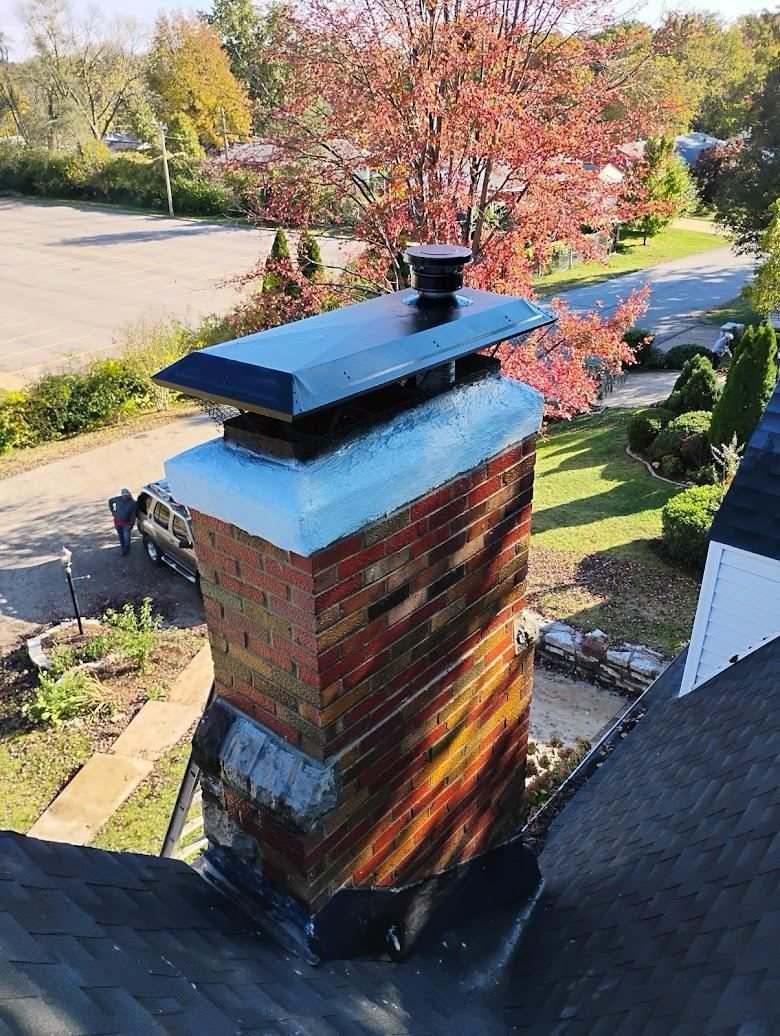
Water pooling in the firebox, damp patches on the wall beside the fireplace, or a musty smell that gets worse after rain — all signs that water is finding its way into your chimney. And the tricky part is that where the water shows up is rarely where it's getting in.
Why the source is hard to find
Water is sneaky. It enters at one point — say, a cracked crown three stories up — travels down through the masonry or along the flue, and appears somewhere else entirely, like a stain on the living room ceiling. That's why chimney leaks are among the most misdiagnosed household problems, and why guessing at the fix wastes money.
The usual entry points
Water around the fireplace almost always traces to one (or more) of these:
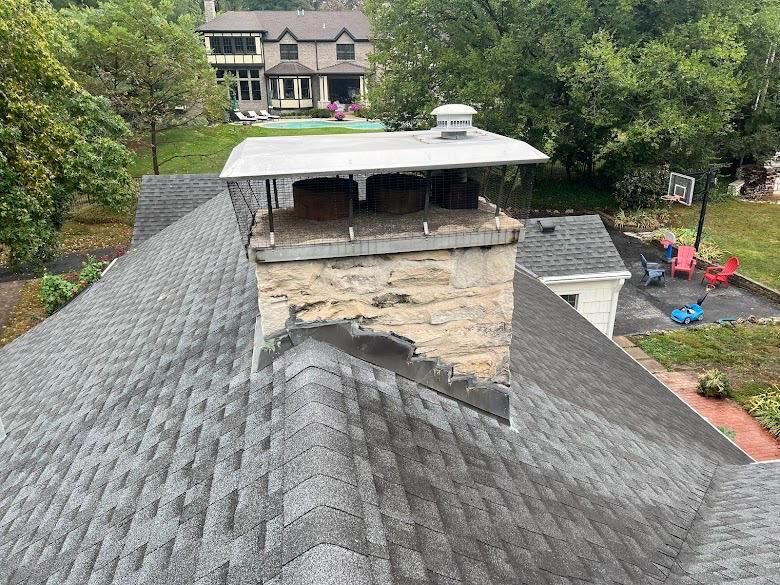
- The crown — the top slab, cracked and letting water down into the masonry.
- The cap — missing or damaged, letting rain straight into the flue.
- The flashing — the roof-to-chimney seal, failed and admitting runoff.
- The masonry — porous brick and open mortar joints soaking up water.
- Condensation — in some cases, from an improperly sized or unlined flue.
Why prompt action matters
A chimney leak doesn't just stain drywall. Left unaddressed, it can rust the damper and firebox, rot roof and framing timber, deteriorate the masonry, and — in our climate — feed the freeze-thaw cycle that widens the very cracks it entered through. What starts as a minor damp patch can become a structural problem.
The right approach
Effective leak repair starts with diagnosis: identifying the actual entry point (or points), fixing it directly, and then confirming the leak is genuinely stopped. Often waterproofing the masonry is the finishing step that keeps water out long-term.